English
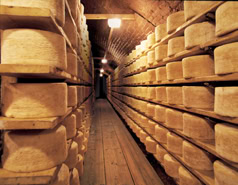
The origins of Gorgonzola are lost in the mists of time, dating back to the end of the ninth century, precisely in 877 AD, in the fertile plains on the outskirts of Milan. This extraordinary cheese takes its name from the Lombard town of Gorgonzola, now in the province of Milan, where it was born almost by chance thanks to a happy combination of territory, climate and peasant tradition.
In ancient times it was called “green stracchino” or “stracchino di Gorgonzola”, a name that already tells its story by itself. In fact, it was produced with the milk of “stracche” cows, i.e. tired, those that at the end of the summer season came down from the Pre-Alps to the Po Valley to rest after the transhumance. This milk, rich and particular, generated by animal fatigue and the change in diet, proved to be exceptionally suitable for the production of soft cheeses with an unmistakable character.
The presence of marbling, the famous blue-green veins that make Gorgonzola unique in the world, was originally a natural and spontaneous process. The molds of the genus Penicillium, present in the environment of the aging cellars, spontaneously colonized the cheese paste, giving it that intense and inimitable flavor that over the centuries would conquer the palates of all Europe.
Over time, the production expanded far beyond the town of origin, involving the entire area of the Po Valley, to become one of the most exported and appreciated Italian cheeses in the world. Today Gorgonzola is protected by the PDO mark — Protected Designation of Origin — as a guarantee of a millenary tradition that continues to live on in every form produced.